Digitalisation in corporate banking is providing efficiency, speed, and centralization, enabling clients to manage their processes from anywhere around the globe.
 
As mentioned in a previous blog on how tech is driving change in Cash Management solutions, corporations in 2021 are looking for ways to use new technologies to improve efficiency and streamline their transactions and treasury processes. At Santander CIB we want to be the best partner to our clients offering the most innovative digital solutions.

In this blog we explore Santander Nexus Global Collections, a digital solution for collections management that improves the receivable life cycle and customer payments management.

nasa
Video file
nasa

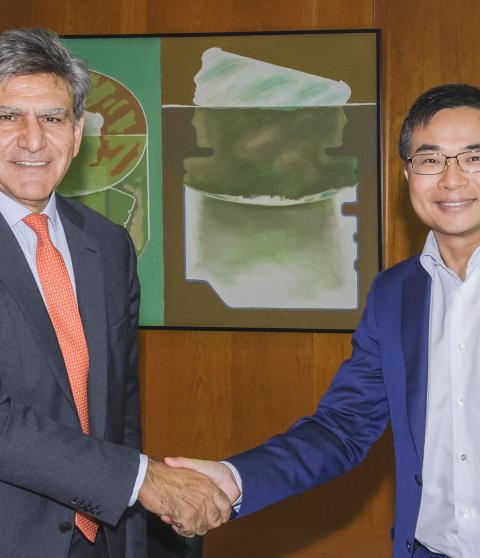
Santander CIB & SAP join forces to accelerate digitalization of Global Transaction Banking services

Santander Corporate and Investment Banking (Santander CIB) and SAP Spain reached an strategic partnership with the aim to boost digitalization across Global Transaction Banking services by co-innovating in solutions around the concept of invisible banking, improving client-to-bank connectivity, providing financial tools to help its clients worldwide navigate supply chain disruptions and accelerating the decarbonization of their industrial activities, reinforcing the way the bank provides the best-in-class service to support the digital transformation of its clients.

The agreement will streamline how Santander CIB approaches its clients, by leveraging the unique capabilities and expertise SAP can offer and co-innovate in value added solutions with multiple benefits for them: from streamlining the connectivity to value-added services related to counterparty risk, supply chain analytics, among others.

As a first step, Santander CIB has enhanced its connectivity capabilities becoming the first bank in the European Union to join SAP Multi-Bank Connectivity (MBC). SAP MBC brings more efficiency to the onboarding process of new clients into Santander CIB’s footprint, since the deployment is secure, quick, and easy. This will improve the overall client experience, including costs and implementation times to get a seamless connectivity experience.

This strategic partnership will enable Santander CIB to progress in providing invisible banking solutions to its clients, by embedding Santander services within corporates Enterprise Resource Planning (ERP) with the ambition of transforming the client-to-bank interactions for the whole suite of GTB products.

Jose Luis Calderon, global head of Global Transaction Banking (GTB) at Santander CIB, said: “This partnership is a step forward in the digitalization of the solutions we provide to our clients, with a strong focus on connectivity, supply chain management and energy transition. We already have a strong transaction banking solutions portfolio in Europe, America and Asia that help our clients navigate the complexity of doing business globally. This valuable proposition comes from the combination of understanding their needs and their daily challenges, leveraging on latest technology that SAP can deliver and the depth and breadth of our product offering.”

João Paulo Silva, SVP & General Manager, SAP South Europe and Francophone Africa, stated: “This agreement, which brings together SAP's technology and Santander's products and services, is an example of co-innovation and demonstrates the importance both companies place on improving operational efficiency and customer experience. We look forward to seeing the positive impact it has on our customers”.

SCF

Understanding the Supply Chain challenges and strategic solutions

Supply chain complexity is one of the biggest challenges that our clients and partners are facing today. At Santander CIB, one of our key priorities is meeting this challenge with powerful and innovative solutions. In this blog we explore key issues and how Santander is supporting our clients to not just manage the current scenario but thrive in it.

Difficulties in the supply chain is something that has been on the horizon for some time, even before the pandemic. Globalization of supply has led to significant offshoring by many globally trading companies, which requires a lean supply chain built on logistics that reduce overall costs - a model known as ‘just-in-time’ which focuses on producing exactly the amount you need at exactly the time your customers need it. Until recently this worked well because demand was easy to anticipate however, frictions in this system were already evident by the end of 2019.

The arrival of the pandemic accelerated and amplified these structural issues and underlying imbalances, which coupled with political tensions and rising energy prices globally delivered a perfect storm scenario. We’ve seen a complete change in trade flows as companies seek to diversify production and supply and the emergence of speed as the new paradigm, where traditional supply chain models cannot keep up with demand. The situation has been further exacerbated in 2022 with rising tensions between Ukraine and Russia, which has led to significant economic sanctions against Russia and knock-on effects for much of the world supply chain, most notably spiking oil and gas prices.

Congestion in supply chains will persist due to volatility but in an environment of rising transportation, energy and inventory costs. Likewise, ESG pressure from governments and consumers alike will continue to affect flows and transportation choices, with decarbonization creating new financial and commodity trades, putting greater pressure on the maritime transportation industry.

As a result, our post-pandemic ‘new normal’ is potentially highly volatile, and the need to be prepared for this paramount. Developing tools to manage trade operations with greater flexibility and at the lowest possible cost, will allow companies to adjust and absorb shocks, but support from banking institutions will be play a vital role especially in the context of energy transition.

At Santander CIB, we have been hard at work supporting our clients through these challenges and finding innovative solutions to help them.

Securing supply has been perhaps the most common problem we are helping our clients manage. From a financing perspective, Santander can offer support and flexibility of capital to manage this. The most effective solutions have been those that position the client as a better counterparty than the competition - for example financing advance payments or larger orders to accumulate stock and grow their inventories to manage the new supply chain dynamics and embedded with the commercial contracts to prevent any impact on the companies leverage.

Inventory solutions have been another important element, and here we are finding that the focus is very much on re-orienting sources of supply, and location of inventories and especially on finding efficient solutions when building stock buffers. In that respect We have been developing solutions to help our client unlock cash tied up as inventory and thereby helping the transition from the “just in time” to the “just in case model”.

According to Mencia Bobo, global head of Trade & Working Capital Solutions at Santander CIB, “Supply chain management is now a common challenge for all our clients. But how they are impacted, and the solution they require are unique to them. Our T&WCs team at Santander CIB are experts in their field and are able to combine macro understanding with a detailed knowledge of local markets specific to our clients to build bespoke solutions and packages to meet these challenges.” 

image

Stablecoins and CBDCs: The future of money in a digital world

A stablecoin is a class of digital currency that attempts to offer price stability while offering an additional level of security from being backed by a reserve asset such as a pre-existing currency (e.g. USD) or gold, for example. Designed to dramatically reduce volatility in relation to cryptocurrencies (e.g. Bitcoin or Ethereum), this results in a form of digital money that is better suited to modern business and day-to-day transactions and transfers than other cryptocurrencies. 

Indeed, such a combination of traditional-asset stability with digital-asset flexibility has proven to be increasingly popular from investors to businesses alike. The Central Bank digital currency (CBDC) was introduced as the traditional market's answer to the stablecoin phenomena from the cryptocurrency world. A CBDC has credit quality of the central bank which can achieve settlement finality for financial contracts. This can also be achieved by other peer-to-peer services in the marketplace, like Fnality, a new wholesale digital cash payments system to settle tokenized transactions with settlement finality. This particular example has the added benefit of its infrastructure being on DLT (Distributed Ledger Technology) enabling faster implementation and meaning that it can interoperate with other DLT systems. It is anticipated that many digital currencies are likely to be built on DLT systems, with blockchains being the most well-known example of this type of technology. However, there are other technology platforms that central banks can consider. 

The use of hybrid information architecture is also being developed on a global scale from Europe to China. As such, digital currency projects have accelerated in the last four years and will only continue to build momentum. Regulators from the traditional banking sector still have a role to play however and are continuing to explore the different questions related to the digital asset processes. The control of Central Banks over CBDC’s is not dissimilar to physical currency, but there are also risks.  Decentralized finance could be a big change for governments, therefore central banks and governments need to work together to make regulated digital finance work globally. 

John Whelan, MD Digital Assets, Santander CIB said: ‘At Santander CIB we are seeing an increasing interest from our clients in the benefits of stablecoins, blockchain and other digital assets and we are proud to be at the forefront of this innovation in capital markets. We are closely watching both the development of CBDCs and privately issued stablecoins and we expect that they will coexist. We believe that Central Banks and other reguators should work together to ensure that prudent regulations are implemented in order to minimize risk and maximize the opportunities”.  

It is becoming increasingly clear that there is the potential for CBDC’s and stablecoins to enhance both wholesale and retail banking. With greater efficiency, increased automation coupled with a variety of DLT and blockchain platforms with unique capabilities, big changes in the plumbinging of the financial markets are anticipated.

In digital securities markets, CBDCs have been demonstrated to work well, and have the advantages of bringing a reduction in settlement risk and the ability to bring atomic settlement to the delivery-vs-payment (DvP) process. This is a good model for the wholesale market that needs to operate on the basis of Central Bank money with no credit risk on the CBDC itself. Through increased automation using DLT, a CBDC system can also avoid settlement risk and trading risks and has the potential to dramatically change Euromarkets. 

For retail banking the frequency of transactions is much higher and regulators need to consider any risks around the stability of the economy, including limits on how much digital currency can be issued to any single individual and whether the two-step currency-distribution model (Central Bank to commercial bank to retail user) should be maintained.

Both the wholesale and retail banking sectors have unique needs and as such it is more likely that Central Banks will take a technology agnostic, public/private partnership approach to making the first digital cash available.

There is still more to expect in the development of CBDCs, Stablecoins and blockchain, but the uptake is positive. In April 2021, Santander CIB collaborated with the EIB in launching the first EUR 100m 2-year bond, placed with key market investors, in the market’s first multi‑dealer led, primary issuance of digitally native security tokens using public blockchain technology (i.e. the public Ethereum network). Like the EIB’s role in green bonds or risk free rates, this new digital bond issuance aims to pave the way for other market players to turn to blockchain technology for the issuance of financial securities. Meanwhile in El Salvador, Bitcoin has been recognised as legal tender in a bid to tackle the economic problem for citizens sending money home from abroad, which accounts for up to a fifth of the country’s GDP (more here). To make these transfers, people must pay high transaction costs, meanwhile 70 percent of people are unbanked. At Santander CIB, our blockchain and digital assets experts are exploring the uses of the latest technology, its implementation and regulation, and will continue to push to be at the forefront of capital markets innovation.
 

PR

Santander and EIT InnoEnergy join forces to accelerate the energy transition

Santander, the world’s leading bank in renewable energy project finance[1] and  EIT InnoEnergy, leading innovation engine for sustainable energy, will collaborate to bring innovation and financial services together

EIT InnoEnergy, the innovation engine for sustainable energy supported by the European Institute of Innovation & Technology (EIT), a body of the European Union, today signed a strategic long-term agreement with Banco Santander (Santander), the world’s leading provider of renewable energy project finance, to support innovation in green energy across the continent.

The aim of the strategic partnership is to help accelerate the development of the EIT InnoEnergy portfolio of start-ups by encouraging investment, reducing the industry skills gap, and driving the development of creative solutions to support sustainable innovations.

Santander offers the full suite of financial services required by such companies. The bank has identified six technologies in which it aims to become a world-class advisor and financier to drive the energy transition, including green hydrogen, energy storage, clean fuels and renewable energy. It also has proven corporate and retail banking expertise in the industrial and energy sectors, having mobilised €69 billion in green assets between 2019 and the first quarter of 2022.

EIT InnoEnergy portfolio of companies, which includes three industrial unicorns, have an aggregated need for €160bn in extra financing over the next five years. In fact, four of the 300 companies in EIT InnoEnergy’s portfolio have already worked successfully with Santander to accelerate their business cases by attracting strategic investors, and obtaining financial resources for accelerated growth.

José M. Linares, senior executive vice-president Banco Santander and global head of Santander Corporate & Investment Banking (Santander CIB), says: “We are delighted to collaborate with EIT InnoEnergy. Supporting innovation is critical if we are to meet our collective net zero targets, and Santander CIB is committed to playing our part. We’ve equipped ourselves to understand the technologies that will help us transition to net zero in order to deliver the advisory and capital markets solutions that energy transition companies need to grow and become industry leaders. In addition we’ve committed to mobilising €220bn in green finance by 2030 and this agreement is another step toward achieving that objective.”

Diego Pavia, CEO of EIT InnoEnergy notes: “This partnership is a win-win for all stakeholders. In just a few months of working together, the companies in our portfolio have been impressed by the simplicity and speed of execution by Santander, the resources mobilised, their understanding of the energy challenges, and the added value the bank brings beyond financial support. We anticipate this will continue as more of our portfolio experiences working with Santander.”

Furthermore, EIT InnoEnergy and Santander share a vision on the importance of supporting entrepreneurship and academic and professional education as part of the net zero transition and are exploring additional initiatives on those fronts to maximise impact.
 

[1]#1 by number of projects, according to the Bloomberg Clean Energy Index


Green Investment

Santander creates Santander Green Investment, a new renewable energy investment platform in Spain

Santander already has a share in nine solar and wind projects in Spain. Their combined capacity amounts to some 500 MW.

Santander Green Investment's self-governance model expedites investment in this type of projects to provide the necessary bank guarantees.

The bank is a leader in renewable energy financing. It mobilized over EUR 65 billion between 2019 and 2021. It remains committed to mobilizing EUR 220 billion by 2030.


Santander has created Santander Green Investment, a platform to invest in renewable energy projects under development and construction. As part of this initiative, led by the Corporate & Investment Banking (CIB) division, Santander has already invested in nine solar and wind projects in Spain, whose combined capacity amounts to some 500 MW.

Under Santander Green Investment's self-governance model, a special committee approves investments, giving the platform the flexibility it needs to make decisions in today’s market. Its investment framework can grant green projects the bank guarantees they require and partner with developers with proven experience in renewable energy ventures.

According to Ignacio Dominguez-Adame, head of Santander Corporate & Investment Banking (CIB) for Continental Europe: “The launch of Santander Green Investment is a demonstration of our business prowess and industry knowledge. The initiative will help consolidate Banco Santander’s leadership in renewable energy financing and is further evidence of our commitment to the transition to a low-carbon economy”.

The new platform will help expedite renewable energy project development and investment. Santander is a leader in renewable energy financing. It mobilized EUR 65.7 billion between 2019 and 2021, At 2021 year-end, it was the highest-ranked bank in renewable energy project finance.[1] It had also issued three green bonds worth EUR 3 billion.

The bank also announced its aim of reaching net zero emissions across the group by 2050 in support of Paris Agreement objectives.

To achieve that target and aid the transition to a low-carbon economy, Santander will align its power generation portfolio with the Paris Agreement by 2030 and stop providing financial services to electricity suppliers if over 10% of their revenue depends on thermal coal. Santander will also eliminate its worldwide exposure to coal mining by 2030.
 

[1] #1 by number of projects according to the Bloomberg Clean Energy Index and #3 by volume according to Dealogic Wind and Renewable Fuels

PR

Enel and Santander sign their first global deal to support clients’ clean energy transition

Enel and Santander have signed a memorandum of understanding (MoU) promoting collaboration between the two groups, aimed at supplying and financing solar facilities, lithium batteries and energy efficiency solutions for households, SMEs and corporations. Under the MoU, Enel, through Enel X Global Retail, the Group's advanced energy services business line, will design customized turnkey solutions for clients while Santander will provide them with tailored financing. The two leading groups will help accelerate the energy transition of clients towards more sustainable models by supporting them in the optimization of their energy consumption.

Alberto De Paoli, Enel Group CFO, said upon signing the agreement: “Through our partnership with a reputable financing institution such as Santander, we are taking yet another step towards the achievement of a Net Zero society. Sustainability as a business choice can only be pursued through innovation, which is at the core of this agreement.”

José M Linares, senior executive vice-president at Banco Santander and global head of Santander Corporate & Investment Banking (Santander CIB) said: “We are thrilled to collaborate with a longtime partner such as Enel to further support our clients worldwide in their transition to more sustainable energy models. As pioneers in renewable energy finance, Santander CIB is committed to accelerating this transformation.”

Enel is already the world’s largest private green energy player with around 54 GW of installed renewable[1] capacity worldwide and is planning to roughly treble that amount by 2030. By fully decommissioning its thermal fleet alongside exiting gas retail activities by 2040, the Group has a Net Zero commitment to that year both for direct and indirect emissions.

Santander aims to raise or facilitate 120 billion euros in green finance between 2019 and 2025 and 220 billion euros by 2030 as part of its responsible banking agenda and its support for its customers transitioning to a low-carbon economy. The bank is already carbon neutral in its own operations. To reach net-zero emissions for the whole group by 2050 in support of the Paris Agreement objectives and the transition to a low-carbon economy, Santander will align its power generation portfolio with the Paris Agreement by 2030.
 

[1] Including storage capacity.

PR

Santander acquires 80% of leading ESG consultancy, WayCarbon

Banco Santander announced today that it has reached an agreement to acquire 80% of WayCarbon Soluções Ambientais e Projetos de Carbono (‘WayCarbon’), a leading Brazil-based ESG consultancy firm.  

WayCarbon has been advising public and private organisations on their energy transition for 15 years, with 170 employees serving clients across 18 countries. The business provides three core services to help clients develop and implement strategies to increase their sustainability:  ESG consultancy; management software to support the tracking and implementation of ESG strategies; and carbon credit trading. 

The acquisition is an important step to further enhance Santander’s own sustainability offerings to support the bank’s clients across all markets in their energy transition.  It will also help Santander progress further in its own ESG objectives by engaging in the voluntary carbon market, reforestation and forest conservation programmes and other emissions trading schemes.

The carbon markets allow companies, non-profit organizations, governments and individuals to buy and sell carbon offset credits, an instrument that represents the reduction of a specific amount of emissions.

José M Linares, global head of Santander Corporate & Investment Banking (Santander CIB), said: “As an industry leader in ESG, WayCarbon will help us with our own objectives and our clients´ in their transition to more sustainable business models. Santander has vast experience in sustainable projects and is a global leader and pioneer in renewable energy finance. This deal will help maintain Santander at the forefront of this critical space”.

WayCarbon CEO Felipe Bittencourt said: “WayCarbon, which has B-corp certification reflecting its commitment to generating profit with a purpose, is focused on catalyzing the transition to a low-carbon economy and has been growing fast in the last few years. This agreement with Santander will expand our business's global scale, with specialized products and services for a wider range of companies in its ten core markets in Europe and the Americas, so we’ll have a greater impact”.

Santander aims to raise or facilitate €120 billion in green finance between 2019 and 2025 and €220 billion by 2030 as part of its responsible banking agenda and its support for its customers transitioning to a low-carbon economy.

It is already carbon neutral in its own operations. To reach net-zero emissions for the whole group by 2050 in support of the Paris Agreement objectives and the transition to a low-carbon economy, Santander will align its power generation portfolio with the Paris Agreement by 2030.

The transaction, which is expected to close by the second quarter of 2022, subject to closing conditions, will have a negligible impact on the group’s capital and deliver a return on invested capital of 30-50% in 3-4 years. 

Santander Digital

How Tech is Driving Change in Cash Management Solutions

Corporations in 2021 are looking for ways to use new technologies to improve efficiency and streamline their transactions and treasury processes. Digitalisation will play a huge part in this, as companies refresh their focus on cash management and capital flows as a response to global economic pressures, and search for bespoke 360 solutions. 

In this blog we explore some of the factors that are a part of this, and look at the solutions that Santander Corporate & Investment Banking can offer in this space. 

At Santander CIB, we recognize digitalisation as a major driver of change in the world of finance right now. With hybrid and remote working now the standard, many corporations are searching for a modern accounting solution that unifies all of a company’s systems and data into a single source and offers automation of repetitive and time intensive tasks. When it comes to managing the regulatory and documentation requirements for businesses operating internationally and in multiple markets, a centralised model that can function on a macro-level is truly valuable to treasurers.  

Additionally, the provision and integration of real-time information and analysis is now expected to form a part of these solutions. With the lasting impact of the pandemic and global financial uncertainty set to remain for some time to come, intelligent automation will be central to forecasting and cash flow optimisation.

Underpinning these needs are the questions of cost, and security. Traditionally high costs associated with activities such as processing paper cheques are being superseded by technologies such as Echeqs, while digital innovations such as electronic signature and blockchain are safeguarding against security risks in a relatively cost effective manner. These technologies are seen as cutting edge now, but we can expect them to become standard services in the coming years. 

At Santander Corporate & Investment Banking, we pride ourselves on our market-leading cash management services, such as our enhanced Santander Cash Nexus Transactional HUB. This comprehensive and centralised, end-to-end solution has been designed to optimise liquidity and cash flows through a smart, centralised channel that can handle all of your needs across a range of countries. 

José Luis Calderón, Head of Global Transaction Banking, Santander, commented, “Recognizing that changing the payment platform is changing the heart of the bank, Cash Nexus has allowed Santander to bring the heartbeat and finish line of the future into today’s reality”.

Our enhanced Cash Nexus has been shown to reduce average client implementation time, transaction processing and connectivity by about 70% and increase transaction performance capabilities by an impressive 75%. Our extensive, worldwide retail banking network drives the Cash Nexus platform’s local capabilities across the world and is self-sufficient in implementing new countries in 65% less time. 

Laureano Rubín de Celis, Global Head of Santander Cash Nexus Hub, remarked, “Our customers needed a consistent global platform isolated from so many different region regimes. We are committed to transforming Cash Nexus into a state-of-the-art backbone which gives us the flexibility to face the challenges that lay ahead”.

Santander’s track record of delivering customised technology solutions to streamline corporate operations means that implementation is flexible and designed to integrate with a range of systems, providing a single global entry point while complying with international standards and offering best in class security technologies. 

Carlos Denche, Global IT Head for Global Transaction Banking, Santander, added, “Comparing the capabilities of new system with old one, the new system is much more flexible for operations to configure and operate, providing greater opportunity to run services in a way that accommodates how payments are evolving, readiness of further API connectivity, development of new payment tools, and more aggressive KPIs.”

The whole system is built to optimise your company's cost savings, return and cash flows and offer you complete control over your business worldwide so that you can focus on maximising your earnings.

PR

Santander CIB appoints Jorge Gil as global head of infrastructure industry group

Santander Corporate & Investment Banking (Santander CIB) has appointed Jorge Gil to lead the infrastructure industry practice, reporting to Darren Jones, head of SCIB UK and global head of Banking & Corporate Finance (B&CF). 

Jorge has spent 20 years in Ferrovial, one of the world's largest private-sector developers of transport infrastructure, where he has held senior roles such as CEO of the Airports and Power Infrastructure subsidiaries, finance director of Ferrovial Group, and Corporate and Business Development and Structured Finance director of Cintra. He has served on the boards of some of the world's largest private infrastructure assets, such as Heathrow Airport, 407ETR highway in Toronto and Indiana Toll Road. Jorge has a truly international profile, having worked on transactions all around the world. Prior to joining Ferrovial, he worked for Chase Manhattan Bank in the Corporate Finance and M&A areas.

Darren Jones, head of SCIB UK and global head of Banking & Corporate Finance: “I am fully confident that Jorge’s appointment will bring our already strong Infrastructure franchise to the next level and, more broadly, complement the investments we are making in energy transition, digital and broader corporate finance agenda.

Jorge Gil mentioned: “I am thrilled to join a leading global firm such as Santander CIB and look forward to reinforcing the successful high profile built up over the past years.
 

Jorge Gil