Regional head of Santander CIB Europe

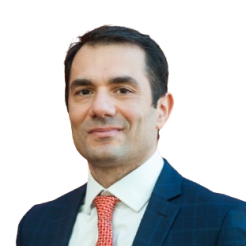
Ignacio Domínguez-Adame

Ignacio joined Santander in 1994. For the last 30 years, he has held positions of responsibility within SCIB, both at a global level and in Brazil, where he headed the business for six years. Since 2016, he has been in charge of the Global Debt Financing business and is currently Board member of Banco Santander Peru, and of Caceis Bank.

Ignacio holds a bachelor’s degree in Economics and Business with a major in Finance from the Universidad Complutense de Madrid and an MBA from the University of Houston.

Head of Santander CIB Colombia

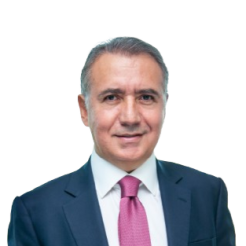
Juan Gil

Since joining Santander in 2020, Juan has been a key figure in the consolidation of our Global Banking business, contributing significantly to the strengthening and positioning of our franchise in the country. In his most recent role as head of Corporate Finance Execution LatAm (excluding Brazil), he successfully led strategic initiatives that enhanced regional collaboration and reinforced Santander’s value proposition for our clients. 

Before joining Santander, Juan held senior roles at leading financial institutions such as Bancolombia and Credit Suisse, and most recently served as CFO at Cafam (Caja de Compensación).


Head of Santander CIB Chile

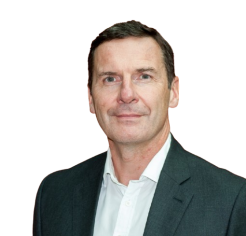
Carlos Ruiz de Gamboa

Carlos is the head of Santander CIB Chile and head of Markets Chile since 2025.

Carlos is a seasoned investment banking executive with over 30 years of leadership experience across Latin America and the U.S., including several senior roles at J.P. Morgan where he spent most of his career. 

Carlos is a well-recognised professional in the region, with a proven track record in global markets, fixed income, corporate finance and risk management. Prior to joining Santander, he worked at Tyndall Group, delivering bespoke strategic financial solutions to clients across Latin America. 

Head of Santander CIB Brazil

Renato Ejnisman

Renato Ejnisman is head of Santander CIB Brazil.

With a career of more than 22 years in Banking, Renato worked at Bank of America and later at Banco Bradesco, where he spent the last 15 years in multiple roles, including Head of Investment Bank, leading its transformation to a top 3 player in Brazil. Additionally, he ran Corporate Banking for middle markets companies, Bradesco Asset Management and Private & Wealth Management.
 

Antony Hung
Regional Head of Santander Asia Pacific

Antony Hung

Antony Hung is the Regional Head for Asia Pacific of Santander Group and is responsible for the Group’s business in Asia Pacific, with branches in Beijing, Shanghai, Hong Kong and Singapore.

Before his current role, Antony was Asia-Pacific Head of Global Banking and Markets and, prior to joining Banco Santander, he was President for Asia excluding Japan for Capula Investment Management Asia Limited and Chairman of its Asia Investment Committee.

Previously, he worked at Bank of America Merrill Lynch as Managing Director and Head of Asia Pacific Global Wealth Management as well as a member of the Global Wealth Management Executive Committee and Asia-Pacific Executive Committee.

Antony was also previously Head of Fixed-Income, Currencies and Commodities for the Pacific Rim region at Merrill Lynch, which he joined in 1993 from Salomon Brothers Asia, where he was Vice-President in Fixed-Income Sales. Before that, Antony held senior positions at CEF Capital Ltd and Exxon Chemical Asia Pacific Ltd.

Antony holds a BBA(Hons) and an MBA from The Chinese University of Hong Kong. He is a Fellow of the Hong Kong Institute of CPA and a member the Association of Chartered Certified Accountants in the UK.


Awards & Recognitions

Contact us

Are you looking for tailored banking solutions to take your organization to the next level? We are here to assist you with any inquiries you may have

What we do

Success, tailored to you: Get the expertise, global reach, and local support you need to realise your ambitions.

We know how important it is for you to grow your business in a secure and resourceful environment, partnering with people who understand your industry. We’re here to provide you with the resources you need.

Image

Our unique approach makes us different

Our clients are at the centre of everything we do. We design and tailor our banking solutions to meet the needs of clients around the world, drawing on a wide range of specialised industry knowledge from our experienced teams, who add real value in understanding and meeting their expectations. Our model is designed to serve them best.

Ever more customized services
Simplify client interactions
Nurture long-term relationships
Coverage adapted to our clients structures
Image

Our services

Global advice and execution in Mergers & Acquisitions (M&A), Equity Capital Markets (ECM) and Leveraged Finance.
Global Banking
Icon
With a global presence and extensive expertise, Santander CIB provides industry leading support for the full range of Global Banking activities.
Risk management, investments, and execution services.
Global Markets
Icon
Our Global Markets team offers risk management solutions, investment products and execution services to a wide range of clients, including Corporates, Financial Institutions, Financial Sponsors and
Tailored banking solutions designed to fit your business.
Global Transaction Banking
Icon
Our Global Transaction Banking business provides tailored banking solutions to some of the biggest and most demanding clients in the world. All our products are designed to fit your business.
Consolidating bank’s services efficiently.
Private Debt Mobilization
Icon
Private Debt Mobilization ensures the capital generation for the Group via distribution of assets. This is achieved through an Originate to Share model encompassing the various private-side

Contact us

Are you looking for tailored banking solutions to take your organization to the next level? We are here to assist you with any inquiries you may have

Boosting the green recovery

Boosting the green recovery: how Santander CIB is leading the way

Six years ago around 200 global leaders signed the Paris Climate Agreement, binding their countries to the transition to a lower carbon economy by phasing out fossil fuel subsidies and pledging to limit the global average temperature increase to a maximum of 2 degrees Celsius above pre-industrial times. In Europe alone, the EUs’ national energy and climate plans (NECPs) for 2021 to 2030 have committed to achieve a 32% share of renewable energy by 2030.

Certainly, these targets are both commendable and necessary. However, considering amongst other important parameters the current role renewable energy plays in global energy generation, are they actually achievable? The answer is simple - financing and investing in renewable energy need to be significantly boosted if countries across the globe are to meet these targets.

According to the UN’s Global Sustainable Development Report, rising incomes, a growing population and increased urbanisation in both developing and developed countries mean that the demand for energy is expected to rise by 25% in 2040. The International Energy Agency (IEA) has concluded that to reach net zero emissions by 2050, annual investments in renewables will need to more than triple by 2030. The increasing number of countries that have pledged to achieve net-zero emissions nowadays covers around 70% of global emissions of CO2 however, even if successfully fulfilled, the pledges to date would still leave around 22 billion tons of CO2 emissions worldwide in 2050.

Without a doubt, more needs to be done. Boosting renewable energy investment can no longer be a matter of choice for institutions, governments and corporations - it is the only way forward towards a more sustainable future. Covid-19 has shown that business models with unsustainable practices may be at a disadvantage in the long-term, and customers will now be expecting the highest levels of social responsibility on behalf of corporations, governments and institutions. The EU is clear about the path and has allocated €1.8 trillion to rebuild a resilient and greener post-Covid-19 Europe.

A large number of banks are increasingly responding to both social and investor regulatory demands for more sustainable financing, with ESG statements often coming from the most senior levels of the organization. Nevertheless, a distinction must be made between merely commenting on the importance of sustainability in banking and implementing measures that will actually contribute to bringing about tangible change to the environment and society. In that sense, Banco Santander has committed to raise, finance and mobilize EUR 120bn of Green Finance by 2025 and EUR 220bn by 2030 – and Santander CIB has been one of the main contributors to the EUR 33.8bn raised, financed and mobilized in 2019 and 2020.

Moreover, a genuine commitment to improving the environment requires a complete transformation of a bank’s culture and offering; that is why Santander CIB has put sustainability at the heart of its corporate strategy, in particular through the recent creation of the ESG Solutions team, headed by Steffen Kram. This new unit is helping our clients to understand the implications of the decarbonization of the economy, assess the impacts on their business models, and more importantly, propose them tailored-made solutions and products to accompany them throughout this journey.

Since last year, Santander CIB has reached several milestones in its sustainability agenda by actively contributing to the reopening of the European market with the issuance of several green bonds in Italy,  also with the recent financing of an Offshore Wind Farm which will become the largest windfarm globally, the first ESG corporate finance advisory role in Hydrogen for an industrial player or with the closing of one of the largest ever sustainability linked Revolving Credit Facility (RCF) and the first syndicated facility of its kind among publicly listed companies in the beverage sector.

Santander CIB finished 2020 as the top financier of renewable projects globally and in our core geographies such as in Spain, both in terms of volume of financing and number of transactions, according to Dealogic. As such, we have helped to finance 13.765MW of new renewables energy capacity in the World in 2020, from 8.036MW in 2019.

The geographic reach of Santander’s financing of renewable energy projects is vast, ranging from, amongst other projects, photovoltaic plants, wind farms, and thermosolar and hydraulic power plants in the United Kingdom, the United States, Brazil, Belgium, Spain, Chile or Uruguay, to name a few. Those sustained efforts that have led us to be the leading international entity in the financing of renewable energy projects according to Dealogic are perfectly complemented in the project bond market (in particular in Spain) or in the debt advisory space, in which Santander CIB is one of the most active players in areas such as the Offshore Wind market, with several mandates in execution in Europe, US and Asia. Santander CIB is also at the forefront of the technological evolution of the sector, for example through our first mandate in floating Offshore Wind business. During 2020 SCIB acted as Sustainability Bond Structuring Agent and bookrunner in Banco Continental de Paraguay’s inaugural USD 300 million Sustainability Bond. This transaction was the first sustainable bond by a Latin American financial institution with an international distribution. Moreover, Environmental Finance named SCIB as Lead Manager of the Year for its role as bookrunner on the Republic of Chile’s CLP 1.6 trillion (USD 2.1 billion) social bonds. The notes were notable for being the largest single sovereign social bond issue in 202 and the first ESG bond issued in local currency by a Latin American sovereign.

In 2020, we participated in 59 Green and ESG loan transactions globally, and ranked third in Refinitiv's league table. Santander CIB’s close alignment with large institutions and entities committed to sustainable growth is an important element in our approach to renewables financing. Working in cooperation with multilateral entities, such as the European Investment Bank, the Council of Europe Development Bank (CEB), one of the main development banks in Latin America (CAF) or the European Bank for Reconstruction and Development (EBRD), Santander CIB offers its clients solutions for energy efficiency and renewable projects globally.

In line with the UN’s sustainable development goals, it is now critical for corporations to reassess their sustainable corporate strategy if they are to actively contribute to a lower carbon economy. Although sustainable financing is increasingly growing, it is only through active and sustained financing of renewable energy projects that the climate action goals outlined in the Paris Climate Agreement can be made a reality.

From personalization to social values: what is shaking up investment banking?

From personalization to social values: what is shaking up investment banking?

As millennials mature into management roles in investment banking and other traditional industries, we take a closer look at the characteristics that define their generation. Much has been said about them over the last few years – some good and some bad - but only one thing is certain: coming of age in a world undergoing profound economic disruption is no easy task.

These individuals – born between 1981 and 1996 – have a completely different set of behaviors and expectations in life than their parents. As one of the largest generations in history about to move into its prime spending years, millennials are in a position to redefine the economy and set the pace for how the banking industry will evolve.

If there’s anything we’ve learned from how millennials interact with the ‘retail’ experience is that personalization is key. But that’s not the only thing that defines millennials´ buying behavior. Here are some character traits which must be kept in mind when catering to this key demographic:

  • Technology is essential: Having grown up with the rise of smartphones and the internet, this is the first digital native generation.
  • Communication is key: Not just frequency and speed but the channel too. With social media as one of their preferred platforms, companies must stay cutting edge from a feature, functionality and interface perspective.
  • Values matter: this one is not just limited to millennials – nowadays, the vast majority of investors care for Environmental, Social and Governance (ESG) causes and try to tailor their investments to their values. They show greater integration of money and values by investing in sustainable and impactful businesses.
  • Flexibility, flexibility, flexibility: the speed of things has made this generation a lot more impatient which is why it’s even more important to be agile and flexible.

So what is Santander CIB doing to better serve these clients?

Personalization is expected across all sectors. We are committed to fulfilling our clients’ needs, surpassing their expectations and helping them to achieve their goals. That’s why, we continue to invest heavily in developing tailor-made solutions and in providing local expertise, fully integrated coverage and cross-border capabilities.

Santander Cash Nexus is an example of our ongoing commitment to deliver innovative digital banking products to our customers. This global payments solution provides access to local transactional services via a single point of entry. Users worldwide can benefit from a simplified payments process and greater visibility thanks to enhanced reports and more.

Terms like financial services and disruption are often coupled with one of the following technologies: artificial intelligence, analytics, machine learning or robotic process automation. At Santander CIB, we are looking into things like intelligent automation and other innovative technologies such as Blockchain to continue delivering our services at an even higher standard than before.

Indeed, when it comes to investment, regardless of the generation, people increasingly prefer to close the gap between personal and societal well-being. This is largely reflected in the way they live, the things they consume, how they work and their investment choices. Investors do not just want to earn a return from their investment but also want it to reflect their personal values and contribute to the social good.

We believe ESG initiatives and responsible banking standards are key drivers for the progress of society. That’s why, as part of our contribution to the Group’s Responsible Banking commitments, we aim to raise or facilitate the mobilization of 120 billion euros by 2025, and 220 billion euros by 2030 in green finance to help tackle climate change. 

Helping people and businesses prosper has always been our driver. With that in mind, the Group recently signed the ‘Green Recovery Alliance’ manifesto which calls for rebuilding our society around social and green principles once this crisis has passed.

With a predominantly millennial workforce, Human Resources is leveraging technology for strategic initiatives. These aim to help individuals identify their potential, learn continuously, upskill themselves and feel empowered to take control of their careers. Santander CIB will continue to bet on young talent by providing people with opportunities to develop a professional career in the Group’s wholesale banking area.

There is no such thing as a secret recipe but companies that can weave together technology, customization and relationships stand to benefit the most - and the longest - from this determined generation and those to come. 

Our ambition: to be ‘net zero’ by 2050

Our ambition: to be ‘net zero’ by 2050

To support the goals of the Paris Agreement on climate change, we are setting our ambition to achieve ‘net zero’ carbon emissions in our portfolio across the Group by 2050. The ambition applies to the group’s own operations, which are already net-zero, and all client emissions that result from any lending, advisory or investment services provided by Santander.

To achieve this and help facilitate the transition to a low-carbon economy, by 2030 the bank will align its power generation portfolio with the Paris Agreement, and has published its first decarbonization targets:

  • By 2030, Santander will have stopped providing financial services to power generation clients with more than 10% of revenues dependent on thermal coal.
  • By 2030 the bank will eliminate all exposure to thermal coal mining worldwide.

These are Santander’s first decarbonization targets for its financial activities and affect material carbon emitting sectors. The bank will provide further details of its roadmap to achieving its net zero emissions ambition in its Climate Finance report, which will be published later this year.

At Santander CIB we are determined to play our part. As a global Corporate and Investment Bank we have a responsibility and an opportunity to support the green transition and encourage and enable more people and businesses to do so as well.

Working together with customers to support them in their transition to reduce carbon emissions will be key to achieving the net zero ambition. The bank will actively engage with customers to help support and enable this transition. Santander has specialist environmental, social and governance (ESG) teams in Santander Corporate & Investment Banking (Santander CIB) and Wealth Management to support that process, is working with the Banking Environment Initiative to develop a framework for client engagement, and is a signatory to Climate Action 100+ to promote action on climate change among the world’s largest corporate greenhouse gas emitters.

Climate change is a global emergency. As one of the world’s largest banks, with 148 million customers, we have a responsibility and an opportunity to support the green transition, and encourage more people and businesses to go green. There is much, much more to be done, but today’s commitments are important steps on the journey.” – Our journey to ‘Net zero’, by Ana Botín, Executive chairman, Santander Group.


Our path to decarbonization: what it is and what we pledge to do? Find out more